Personal protective equipment (PPE) refers to equipment designed to be worn or held by workers in order to protect them against one or more risks that may threaten their safety or health during work activities. The legal definition is contained in Decreto Legislativo 81/2008 (Consolidated Act on Health and Safety at Work), which represents the primary regulatory framework in Italy for accident prevention and health protection in the workplace.
PPE constitutes a residual protective measure: it must be adopted when risks cannot be eliminated or sufficiently reduced through technical, organizational, or procedural interventions (collective prevention measures). Hierarchically, legislation prioritizes eliminating the risk at its source, then implementing collective protection systems, and only subsequently using individual protective devices.
From a technical standpoint, PPE includes a wide range of equipment, classified according to the part of the body protected or the type of risk addressed. These include safety helmets for head protection; goggles and face shields against flying particles or chemical agents; gloves protecting against mechanical, chemical, or biological risks; safety footwear with reinforced toe caps; high-visibility clothing; respiratory protective equipment (such as filtering masks and respirators); and fall-arrest harnesses for work at height.
Each item of PPE must comply with the essential health and safety requirements set out by European legislation and bear the CE marking, ensuring conformity with harmonized technical standards. The choice of appropriate PPE cannot be arbitrary: it must derive from a thorough and documented risk assessment analyzing the nature, extent, and duration of exposure.
Responsibility for providing PPE rests exclusively with the employer. Decreto Legislativo 81/2008 establishes that employers must supply workers with suitable equipment appropriate to the identified risks, ensuring regulatory compliance, efficiency, and maintenance. The cost of PPE cannot be borne by the employee: it must be provided free of charge.
In addition to supplying the equipment, employers must ensure adequate information, training, and—where necessary—specific practical instruction on proper use. This aspect is crucial: even technologically advanced PPE is ineffective if used incorrectly or worn improperly.
The company’s prevention system also involves other key figures. The Head of the Prevention and Protection Service collaborates in risk assessment and in identifying the most appropriate PPE; the occupational physician, where required, contributes to defining protective measures in relation to specific health risks; and the workers’ safety representative must be consulted regarding the selection of devices. Workers, in turn, have a legal obligation to use the PPE provided correctly and to take proper care of it, promptly reporting any defects or malfunctions.
A particularly relevant aspect concerns the classification of PPE into risk categories (I, II, and III) under European sectoral legislation. Category III PPE—intended to protect against risks of death or serious and permanent injury (for example, fall-arrest systems or protection against highly hazardous chemical agents)—requires stricter certification procedures and often mandatory practical training for users. This regulatory level reflects the central role of prevention in high-risk sectors such as construction, manufacturing, healthcare, and the chemical industry.
Personal protective equipment is therefore a fundamental component of workplace safety management systems. It does not replace collective prevention measures but complements them where residual risk cannot be further reduced. Providing PPE is a non-delegable obligation of the employer, who must ensure not only the physical availability of the equipment but also its technical suitability, maintenance, and proper user training. Only through a systemic approach based on risk assessment and collaboration among prevention stakeholders can PPE effectively fulfill its primary function: safeguarding workers’ health and safety.
Three Examples of Mandatory PPE in the Workplace

Personal protective equipment (PPE) plays a central role in corporate prevention systems and, in the presence of specific risks, its use becomes mandatory pursuant to Decreto Legislativo 81/2008. The obligation is not generic but stems from the employer’s risk assessment: when a risk cannot be eliminated or reduced through technical or organizational measures, PPE becomes a necessary and binding measure for the worker.
Below are three typical examples of mandatory PPE in specific work contexts.
1. Safety Helmet (Protective Hard Hat)
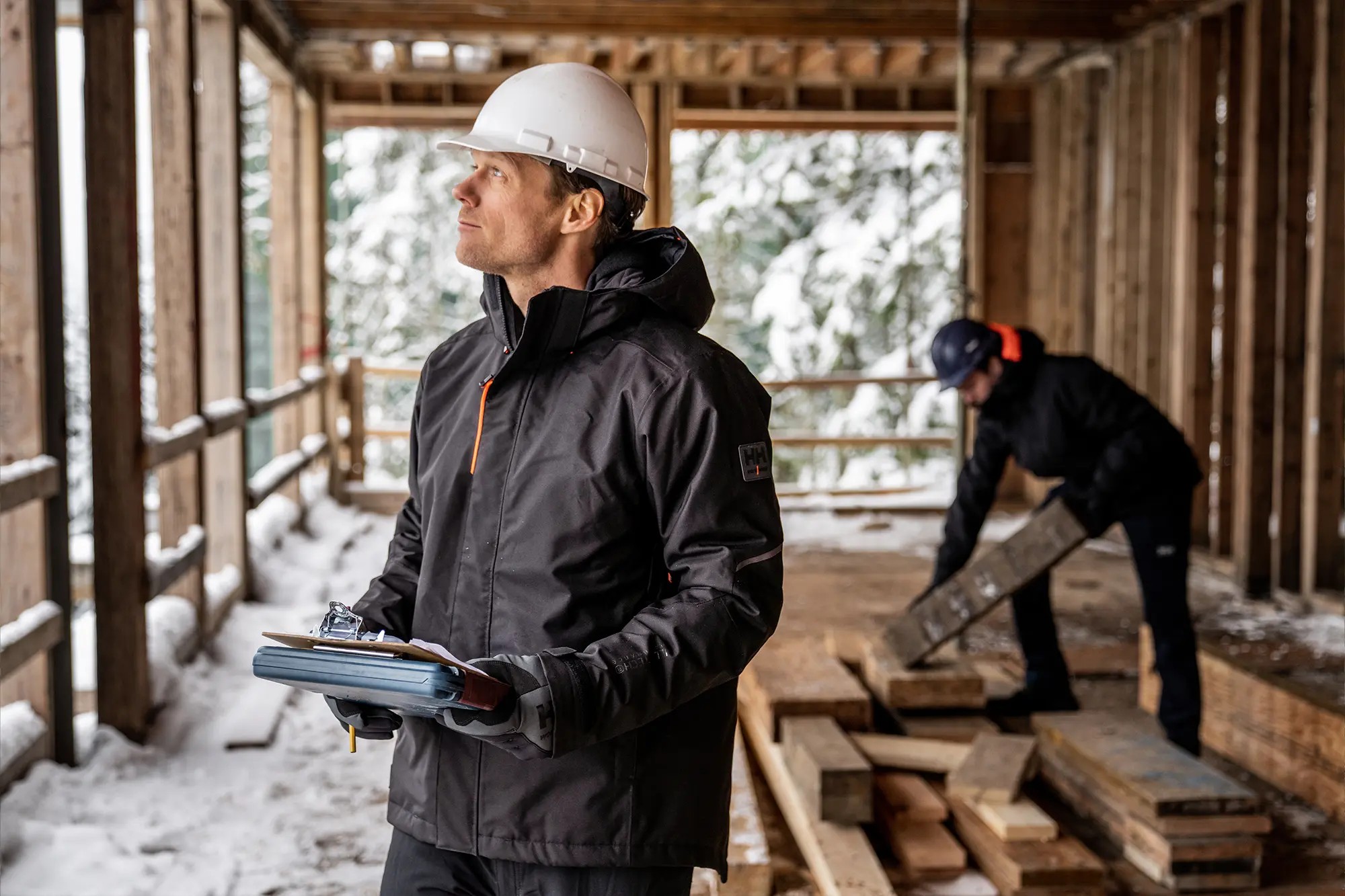
The helmet is mandatory on construction sites and in all environments where there is a risk of falling materials, impact against fixed or moving structures, or projection of objects. It protects the head from cranial trauma that may have extremely serious or fatal consequences. On temporary or mobile construction sites, the obligation is generally specified in the Safety and Coordination Plan (PSC) and in the Risk Assessment Document (DVR).
The helmet must comply with European technical standards (e.g., EN 397), bear the CE marking, and be replaced in the event of significant impact or deterioration.
2. Safety Footwear with Reinforced Toe Cap
Safety shoes are mandatory in numerous industrial, logistics, and craft sectors where there is a risk of foot crushing due to falling heavy loads or material handling. The toe cap, typically made of steel or composite material, protects the toes from impacts up to specific energy thresholds.
Depending on the risk profile, additional features may be required: slip-resistant soles, anti-perforation midsoles, resistance to chemical agents, or antistatic properties. As with all PPE, provision is the employer’s responsibility.
3. Respiratory Protective Equipment
Filtering masks and respirators are mandatory when workers are exposed to dust, fumes, gases, or potentially harmful biological agents, such as in healthcare, chemical industries, or dusty material processing. The selection of the appropriate device (FFP2, FFP3, or respirators with specific filters) depends on the level and type of contaminant.
Proper use requires information and, in more complex cases, practical training.
These examples demonstrate that PPE obligations are not merely formal requirements but are strictly linked to actual risk exposure and to the effective protection of workers’ health.
Unicar: A Trusted PPE Supplier in Friuli Venezia Giulia for Businesses
In the workplace safety landscape of Friuli Venezia Giulia, Unicar Spa stands out as a key supplier for companies requiring reliable, certified, and regulation-compliant personal protective equipment (PPE). In a productive environment characterized by a strong presence of manufacturing, logistics, construction, and industrial enterprises, choosing a competent safety partner represents a strategic factor in protecting workers and ensuring compliance with Decreto Legislativo 81/2008.
Unicar acts as a qualified partner for the supply of a wide range of PPE designed to protect workers from mechanical, chemical, biological, and environmental risks. The offering includes protective helmets, goggles and face shields, technical gloves for various processing activities, safety footwear, high-visibility clothing, fall-arrest devices for work at height, and respiratory protection systems.
All products are selected in compliance with applicable European regulations, bearing CE marking and meeting relevant technical standards—an essential requirement to ensure both legal validity and protective effectiveness.
A distinguishing feature of Unicar is its consultative approach. PPE supply is not viewed as a simple sale of products but as an integral part of a broader occupational safety management process. The selection of equipment must align with the company’s risk assessment and the operational specificities of each production department. Unicar supports companies in identifying the most suitable solutions, taking into account exposure levels, frequency of use, operator comfort, and durability.
For businesses in Friuli Venezia Giulia, relying on a locally established supplier also means having a prompt and dependable reference point for reorders, supply integration, and regulatory updates. In workplace safety—where legal requirements evolve and risks vary depending on operations—service responsiveness and technical expertise constitute significant added value.