The car first aid kit is not just a recommended accessory, but a safety device that can make a difference in critical situations. In the event of a road accident or sudden illness, the first few minutes are crucial: acting promptly with the right tools can reduce complications and, in some cases, save a life. However, many drivers are not fully aware of the legal requirements, the devices that must be included, and how to properly maintain the kit over time. Let’s examine three fundamental aspects every driver should know.
What to know about car first aid kits: three essential aspects
The first point concerns legal requirements. In Italy, regulations distinguish between private vehicles and company vehicles or those used for professional transport. For private cars, there is no general legal obligation to carry a first aid kit; however, it is strongly recommended for safety and civil liability reasons. The situation is different for businesses: the regulatory reference is Legislative Decree 81/2008, which governs health and safety in the workplace. If the vehicle is a work tool (for example, for sales representatives, technicians, or transport operators), the employer must ensure the presence of a kit compliant with the company’s classification (group A, B, or C) and appropriate to the level of risk. Furthermore, during roadside inspections, the absence of the required equipment may result in administrative penalties. When traveling abroad, it is also advisable to check local regulations: in some European countries, such as Germany and Austria, carrying a first aid kit is mandatory for all vehicles.
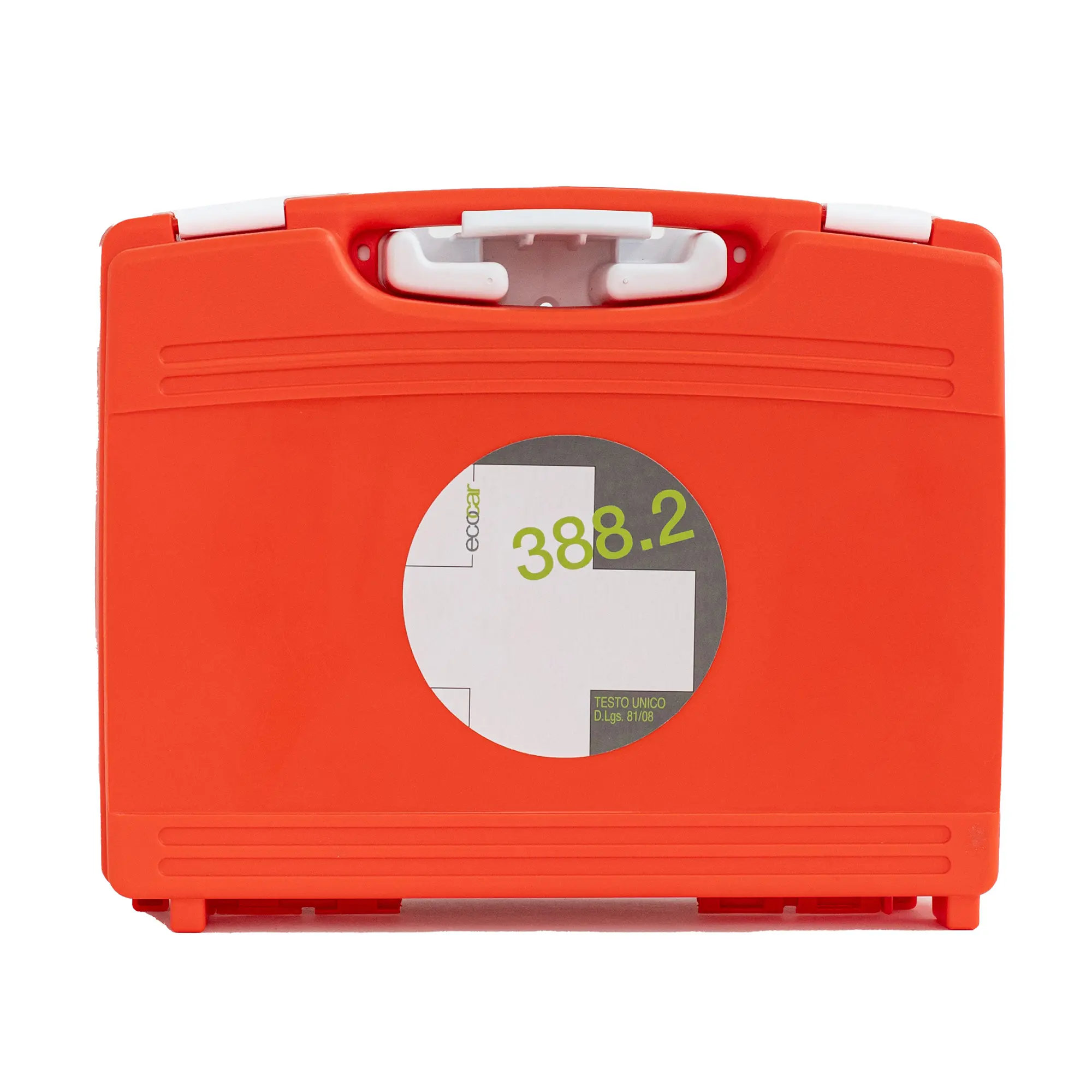
The second fundamental aspect concerns the minimum required contents. A car first aid kit must include equipment suitable for handling the most common emergencies: wounds, bleeding, minor trauma, and superficial burns. Essential items include disposable nitrile gloves (for biological protection), sterile gauze pads in various sizes, gauze compresses, elastic bandages, assorted adhesive plasters, skin disinfectant (preferably chlorhexidine-based), scissors with rounded tips, a tourniquet, and instant cold packs. In company kits compliant with Legislative Decree 81/2008, sterile saline solutions for eye irrigation and thermal blankets may also be included. It is important to emphasize that the first aid kit does not replace qualified medical intervention: its purpose is to provide initial support while waiting for emergency services. In the event of a serious accident, the operational reference remains the European emergency number 112, active in most European countries.
The third key element concerns maintenance and proper long-term management. A first aid kit is not a static item to be forgotten in the trunk. Periodic checks — at least once or twice a year — are necessary to verify the expiration dates of sterile materials and disinfectants. High summer temperatures and winter cold can compromise the integrity of certain products, especially if the vehicle is parked outdoors. It is good practice to store the kit in an easily accessible location, ensuring it is not covered by luggage or heavy objects. Additionally, after each use, its contents must be promptly replenished. From a corporate organizational standpoint, it is advisable to appoint an internal person responsible for checking company vehicle supplies, documenting inspections for potential audits or inspections.
Understanding the regulatory framework, ensuring the completeness of the contents, and guaranteeing regular maintenance are the three essential conditions for making a car first aid kit truly effective. It is not merely about complying with an obligation, but about adopting a prudent and responsible approach. In a context where road safety also depends on individual preparedness, having the right tools and knowing how to use them represents a concrete preventive measure and protection for oneself and other road users.
Supply of car first aid kits and car accessories in Friuli Venezia Giulia: the experience of Ecocar
In the field of road safety and mandatory equipment for company vehicles, the supply of car first aid kits requires regulatory expertise, logistical reliability, and careful attention to product quality. In Friuli Venezia Giulia — a region characterized by a strong presence of SMEs, craft businesses, and cross-border transport activities toward Austria and Slovenia — the demand for compliant and readily available solutions is particularly high. Within this context, the experience of Ecocar stands out as a company specialized in supplying car first aid kits and vehicle safety accessories.
The distribution of first aid kits is not limited to the simple sale of a standardized product. For companies that use vehicles as work tools, the regulatory reference remains Legislative Decree 81/2008, which requires employers to ensure adequate first aid measures. This means that kits must comply with the company’s classification (group A, B, or C) and include sterile devices, personal protective equipment, and materials for managing the most common emergencies. A qualified supplier must therefore provide not only certified products, but also consultancy services to identify the most suitable solution based on the company’s risk profile and type of activity.
In Friuli Venezia Giulia, the strategic geographical location entails additional operational considerations. Many local companies operate on international routes, making it necessary to verify compliance with the regulations of neighboring countries, where carrying a first aid kit may be mandatory for all vehicles, including private ones. A partner like Ecocar distinguishes itself precisely through its attention to these aspects: in addition to car first aid kits, it offers vehicle safety accessories such as approved warning triangles, high-visibility vests, spare bulb kits, and signaling devices compliant with European standards.
Another element of added value is the management of periodic maintenance of equipment. First aid kits must be regularly checked to verify the expiration dates of sterile materials and the integrity of devices. In corporate settings, this process can be structured through scheduled inspections and automatic replenishment of used or expired products, reducing the risk of non-compliance during inspections. A consultancy-based approach allows companies to outsource part of their documentation management, improving internal efficiency.
The supply of car first aid kits in Friuli Venezia Giulia requires a combination of regulatory expertise, distribution speed, and attention to quality. The experience of Ecocar demonstrates how a specialized operator can provide not just products, but integrated solutions for company vehicle safety, contributing to worker protection and full compliance with current regulations.