Operational continuity is one of the most important factors for any company that wants to maintain productivity, meet deadlines, and provide reliable service to its customers. In a market characterized by increasingly complex supply chains, transportation delays, fluctuating demand, and procurement challenges, relying on a dependable partner represents a real competitive advantage. Purchasing high-quality products is not enough; it is equally essential to ensure they are available when needed, in the required quantities, and supported by an efficient logistics service.
The continuity of business operations increasingly depends on building strong relationships with suppliers capable of delivering reliability, expertise, and flexibility. In this context, choosing the right partner becomes a strategic decision that goes far beyond a simple commercial relationship.
Operational Continuity: More Than Simply Product Availability
When discussing operational continuity, people often think only about preventing interruptions to production activities. In reality, the concept is much broader and includes all the processes that enable a company to operate without disruptions while minimizing risks associated with the supply chain.
Effective supply continuity helps maintain consistent service levels, meet agreed delivery schedules, and reduce costs caused by delays or unforeseen events. For this reason, it is essential to work with suppliers that can efficiently plan procurement, monitor product availability, and respond quickly whenever unexpected situations arise.
In today’s competitive environment, the value of a partner is also measured by its ability to anticipate potential issues, provide timely alternatives, and ensure a stable supply chain, reducing the impact of market fluctuations. Supply chain resilience ultimately depends on the quality of the relationships companies establish with their suppliers.
Supplier Management and Logistics: Two Closely Connected Elements

Modern supplier management goes far beyond selecting the best products. It also involves evaluating a partner’s reliability, organizational capabilities, and logistics expertise.
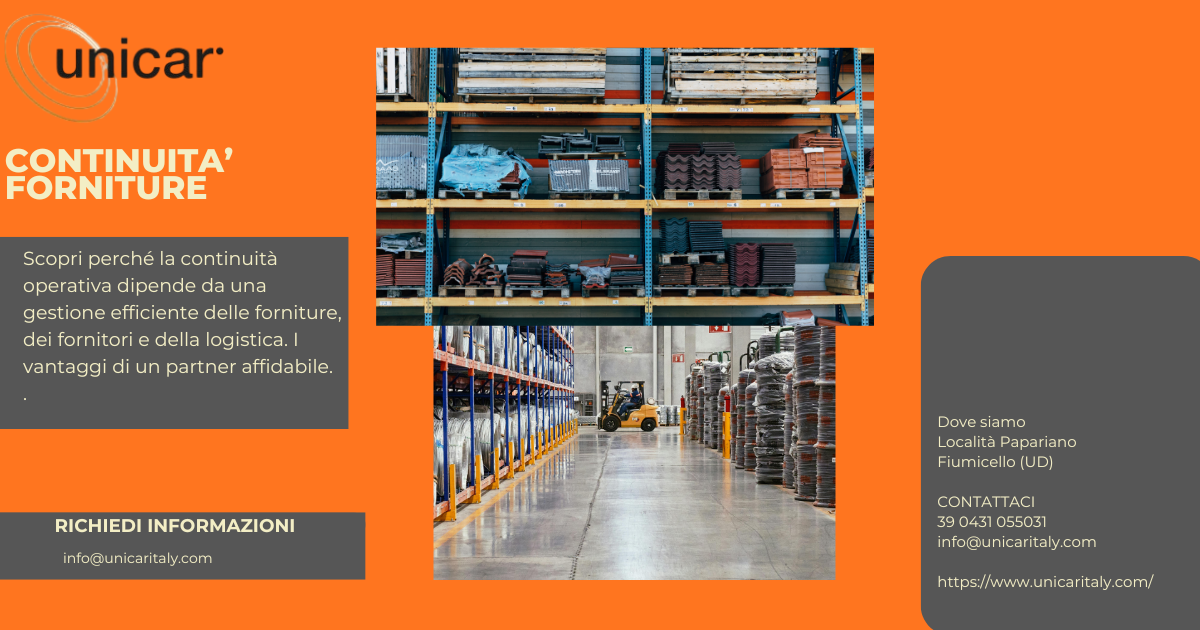
A truly dependable supplier can guarantee well-structured processes, direct control over the supply chain, predictable delivery times, and continuous support throughout every stage of the collaboration. Logistics also plays a crucial role: organized warehouses, effective shipment planning, and strong distribution capabilities help reduce waiting times and ensure on-time deliveries.
For companies operating in the automotive, safety equipment, PPE, first aid, and workwear sectors, these factors directly impact daily productivity. Every delay can lead to operational downtime, reduced efficiency, and higher costs, while a well-organized logistics system helps maintain consistently high service standards.
The Value of a Partner with Direct Supply Chain Control
One of the key factors that distinguishes a simple supplier from a true business partner is direct control of the supply chain. Managing production, importing, product selection, and distribution internally provides greater planning capabilities and delivers increased stability to customers.
This approach reduces dependence on intermediaries, improves product traceability, and enables faster responses whenever necessary. It also helps maintain consistently high quality standards while ensuring competitiveness and reliable supply continuity.
This is the business model adopted by Unicar, which has been supporting companies, distributors, retailers, and industrial businesses for more than thirty years through an integrated approach that includes specialized consulting, direct manufacturing, importing, and advanced logistics. By maintaining direct control over its supply chain, Unicar ensures reliable supplies, optimized delivery times, and continuous support for professional customers.
Choosing the Right Partner Means Investing in Operational Continuity
The continuity of business operations depends not only on the quality of the products purchased but also on the partner’s ability to support customers over time through expertise, reliability, and efficient services.
Investing in a strong partnership means reducing risks, simplifying supplier management, improving procurement planning, and relying on logistics capable of responding quickly to operational needs. In an increasingly dynamic economic environment, operational continuity has become a strategic factor for maintaining business competitiveness.
Choosing a partner like Unicar, which combines extensive experience, direct supply chain control, and advanced logistics capabilities, allows companies to face market challenges with greater confidence, provide consistent service to their customers, and build long-term business relationships based on trust, quality, and reliability.